
Anúncios
Nostalgia gets a bad reputation, but it’s actually a powerful emotional tool. When you listen to an older song, your brain does something fascinating: it connects sounds to images, smells, places, and people.
 4.3
4.3
Spotify: Music and Podcasts
Informações sujeitas a alteração. Consulte a loja oficial para detalhes atualizados.
Anúncios
That’s why one track can make you smile without explanation, or tighten your chest even when you’re “okay.” Also, older music often has something many people miss today: stronger melodies, more direct lyrics, and an identity that didn’t rely so much on fast, disposable trends.
Still, not everyone searches for the same kind of “old music.” Sometimes you want the biggest classics; other times, you want hidden tracks that feel like a personal discovery. And that’s exactly why the app you choose matters—because it shapes what you find and how you feel it.
Here’s the real key: it’s not “searching songs,” it’s rebuilding a whole world
Anúncios
Most people open an app and type an artist’s name. It works, sure. But if you want to truly enjoy old music, there’s a better trick: search by feeling and by era. For example:
- “Summer 1987”
- “’90s romantic ballads”
- “Classic rock road trip”
- “’70s soul”
- “Rainy night boleros”
When you do that, music stops being background noise. It becomes an emotional setting. And the best part is that big music apps usually have exactly what you need… as long as you know how to ask for it.
Three apps to listen to old music (Android and iOS)
There are many options, but here are three of the most popular and useful for finding classics, hidden gems, and well-built retro playlists: Spotify, Deezer, and YouTube Music.
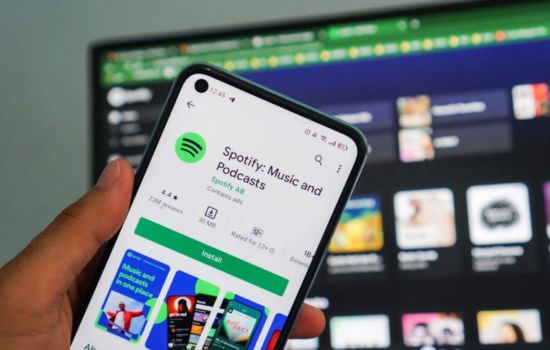
Spotify: where playlists do the heavy lifting
Spotify is strong for a reason: its recommendations and playlists are often excellent for old music. It doesn’t only push what’s popular; it “learns” your taste and gradually leads you toward similar artists and eras.
What’s interesting is that you can use Spotify in two different ways:
- Fast mode: you play a playlist like “80s Hits” and you’re done.
- Discovery mode: you explore song radios, related artists, and user-made playlists.
And here’s a detail many people ignore: user-made playlists can be gold. They don’t follow a commercial formula. They mix deep cuts, live versions, B-sides, and tracks that never show up in the “standard” lists.
How to get more out of Spotify:
- Search “This Is + artist” to enter through the main door.
- Then open the Song or Artist “Radio” for hidden gems.
- Like tracks and build your own decade-based playlists.
If you want the feeling that music “finds you,” Spotify usually delivers.
Deezer: a smoother, calmer experience (great for routines)
Deezer often feels simpler and more direct, and that can be a real advantage. One of its strengths is how it organizes music, plus features like Flow, which plays a personalized mix based on your taste.
For old music, Deezer works especially well if you like:
- Listening to full albums without overthinking.
- Finding compilations by decade or genre.
- Keeping an organized library with fewer distractions.
And if you’re the kind of person who repeats the same classics again and again, Deezer fits that vibe: less endless scrolling, more “press play and enjoy.”
How to use Deezer for classics without wasting time:
- Search “best of” + decade (example: “best of the 70s”).
- Explore compilations and “greatest hits.”
- Create a playlist called “My Classics” and slowly build it.
Deezer is ideal when you want a stable, cozy listening flow.
YouTube Music: for rare versions and hard-to-find tracks
YouTube Music has a superpower the others don’t always match: a massive amount of rare versions and special content. Sometimes you search for an old song and it’s not on Spotify or Deezer, but it shows up on YouTube—an old live performance, a TV recording, a forgotten remix, or a full album upload.
That makes it perfect for people who love:
- Concerts and live sessions.
- Songs that are difficult to find elsewhere.
- Alternate versions and covers.
- Long mixes like “1 hour of old classics.”
Another big advantage: if you enjoy discovering music through videos (even if you only listen), YouTube Music can feel like treasure hunting.
How to get the most out of YouTube Music for old music:
- Search terms like “live,” “remastered,” “full album,” “vinyl.”
- Use long decade playlists.
- Save rare finds into a private playlist.
If you’re the type who wants that exact version, YouTube Music is a strong choice.
How to choose the best app for you (based on your listening style)
Instead of looking for “the best,” choose based on your intention:
- If you want smart playlists and automatic discovery, pick Spotify.
- If you want comfort, organization, and a calmer experience, choose Deezer.
- If you want rarities, live versions, and hard-to-find tracks, go with YouTube Music.
Many people end up using two: one for daily listening, and another for special discoveries.
A simple method to “revive” decades without getting bored
If you always listen to the same songs, the magic fades. So try this 3-step method:
- Pick one decade per week
Week 1: 70s. Week 2: 80s. Week 3: 90s. It keeps things fresh. - Mix popular with rare
For every 10 big hits, find 2 lesser-known songs. That’s where the charm returns. - Name playlists emotionally, not technically
Instead of “80s playlist,” try:
- “City nights”
- “Sunday walk”
- “Classics that hug”
- “Songs that fix me”
It sounds small, but it changes how you feel the music.
A mini-guide to finding hidden gems in any app
This trick works almost every time:
- Pick one old song you truly love.
- Open “Radio” or “Similar songs.”
- Explore related artists.
- Save only what makes you feel something.
- Repeat the cycle.
In 20 minutes, you can build a classics playlist that doesn’t feel like the same “top 20” all over again.
Tiny rituals that make old music hit harder
Old music feels better when you give it space. Nothing complicated:
- Turn on “Do Not Disturb” for 15 minutes.
- Use headphones, even briefly.
- Lower the lights.
- Listen to two songs without doing anything else.
It’s simple, but it’s exactly what old music seems to ask for.
Conclusion
Apps don’t only help you listen to music—they help you feel again. If you want old songs to come back with real impact, choose a platform that matches how you explore. Spotify is excellent for playlists and discovery; Deezer brings comfort and organization for effortless listening; and YouTube Music shines when you want rarities, live performances, or tracks that are hard to find elsewhere. In the end, the app matters less than the experience you build—because when an old song finds you at the right moment, it doesn’t sound “old”… it sounds timeless.
See also
- The “Hidden” Way to Watch Biblical Movies on Your Phone
- Night Vision Apps on Your Phone: What They Really Do
- Learn Zumba on your phone and turn any day into an energy party
- App to Listen to Radio on Your Phone
- App to Turn Your Phone Into an Alexa: Discover How!